B2C · Mobile · Industrial
Wellness App + Device Pair
A tamagotchi-inspired, AI-powered wellness ecosystem designed for empathy. Transforming anxiety care into an interactive relationship with a pocket-sized companion.

Google X
Time
Sep 2024 - Nov 2024
Location
Mountain View, CA
Team
Alina Zhang
Yves Louise
Aishwarya Kulkarni
Vanessa Brown
Christian Waters
Responsibilities
Lead Product Designer
User Researcher
Product Strategist
Expertise
UI/UX Design
Industrial Design
3D Modeling
Motion Graphics
Systems Mapping
Design Challenge
Backgound
Anxiety affects over 264 million people globally, including 40 million adults in the U.S. Yet up to 70% of cases may be undiagnosed or underreported, suggesting its true impact is far greater. Despite its scale, anxiety remains stigmatized. Many individuals avoid visible or clinical interventions and resist tools that feel surveillant or effort-heavy. Current solutions often prioritize tracking over comfort, creating an opportunity for discreet, personalized, and restorative support.
Core Features
01
Seamless Digital/Tactile Companion System
User Pain Point
Most anxiety tools live entirely on the phone and require active engagement, making support easy to ignore or overwhelming to maintain.
Our Solution
OpO introduces a seamless companion system combining a pocket-sized tactile device with a mobile app. The wearable “e-pet” device offers discreet, calming interventions through gentle haptics and light, while the app surfaces personalized insights and guided tools.
02
Personalized Progress Dashboard
User Pain Point
Many anxiety apps either overwhelm users with raw tracking data or rely on journaling and meditation practices that feel too effortful to sustain.
Our Solution
OpO’s home dashboard focuses on progress rather than numbers. Daily mood check-ins, activity streaks, and companion status provide a simple snapshot of emotional well-being. OpO transforms personal growth into nurturing relationship.
03
CBT-based Interactive Game Mode
User Pain Point
Many CBT apps rely on journaling prompts or lesson-based exercises, which can feel like tasks to complete rather than experiences users want to return to.
Our Solution
OpO translates CBT (cognitive-behavioral therapy) techniques into an exploratory game built around their e-pet companion. As users guide their companion through different environments, each stop introduces simple activities adapted to the user’s mood and needs. Through gentle adventures, the experience encourages healthier habits without feeling overwhelming.
04
Interactive AI-Powered Chat
User Pain Point
Many people experiencing anxiety lack access to consistent therapy due to cost, availability, or stigma. Generic AI chat tools also struggle to provide structured emotional support grounded in psychological best practices.
Our Solution
OpO provides an interactive AI companion grounded in therapist-backed CBT frameworks. Through conversational guidance, the system offers gentle reframing, grounding prompts, and emotional reflection tailored to the user’s patterns and app activity.
05
Micro-Interactions & Sensory Design
Guided Breathing with Sensory Feedback
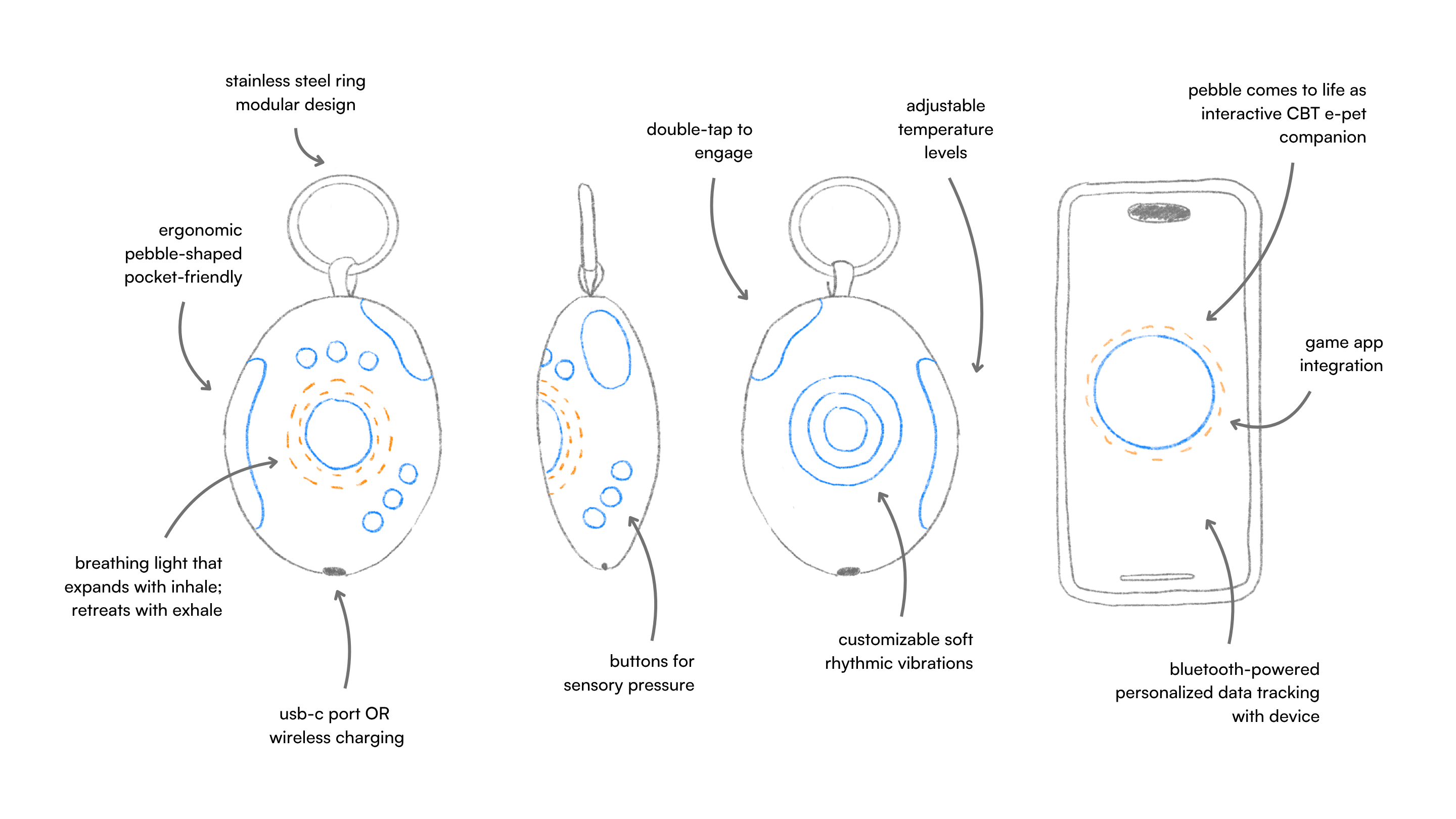
To help users quickly regulate stress, OpO guides breathing using the 4-7-8 method through parallel sensory cues.
In-app, a gentle animation expands and contracts to indicate inhale and exhale. On the device, rhythmic light and subtle haptic pulses mirror the same tempo.

Soothing Haptic Patterns
Inspired by the slow rhythm of a Zen rake moving through sand, three concentric rings in the device produce gentle, continuous vibrations designed to ground the user through tactile sensation.

Impact
We reached out to 20+ beta users for in-depth feedback. 75% would purchase both the OpO device and app.
“It solves the problem and looks pretty, I want it.”
“There is no destination called ‘all-better-now,’ and so a device like this seems uniquely poised to offer continuous improvement through different means.”
“When I’m actually breaking down, I just need something simple.”
Strategy
Identifying a $447M Market Opportunity
Through a 2x2 analysis, we identified a gap at the intersection of technology-enabled coping tools and comfort-driven, restorative experiences—an area underserved by both clinical solutions and consumer wellness apps. Using TAM/SAM/SOM modeling, we estimate an initial $447M serviceable market entry, positioning OpO within a high-growth space for accessible mental health support.

Creating a Phased Product Roadmap
Recognizing the complexity of building a connected hardware–software ecosystem, we developed a phased roadmap to incrementally realize OpO’s vision.

Phase 01
Device MVP
Core tactile experience with haptic feedback, lighting, and basic interaction.

Phase 02
Device + App Integration
Real-time syncing, sensing capabilities, and integrated processing across platforms.

Phase 03
Intelligent AI Support
Advanced natural language processing, sentiment analysis, and adaptive conversational guidance.
Design Process
Mapping the Vicious Cycle of Anxiety
By mapping the emotional journey of anxiety, we identified a recurring cycle: triggers activate physiological and behavioral responses, which—without effective coping—lead to heightened anxiety and lingering emotional residue. This leaves users more vulnerable to future triggers. OpO intervenes at moments of escalation, introducing coping mechanisms that help break and reset the cycle.

Targeting the “Energy Poltergeist”
We identified three user types based on their ability to regulate anxiety. We focused on the “energy poltergeist”—users who struggle most to identify triggers, patterns, and appropriate coping actions. Designing for this group ensured the solution could support the widest range of needs.

Round 1 Prototyping
Testing 3 Discreet, Personalized Interventions
Guided by four principles—discreet, restorative, low-effort, and personalized—I explored three form factors: jewelry, garment, and accessory-based companions. Users consistently resonated with the companion concept, highlighting the appeal of a warm, pet-like presence enhanced with AI and therapeutic guidance.

Concept 01
Fluid Necklace
Versatile wearable with nodes that vibrate on pressure points, offering relief from stress, migraines, and anxiety.
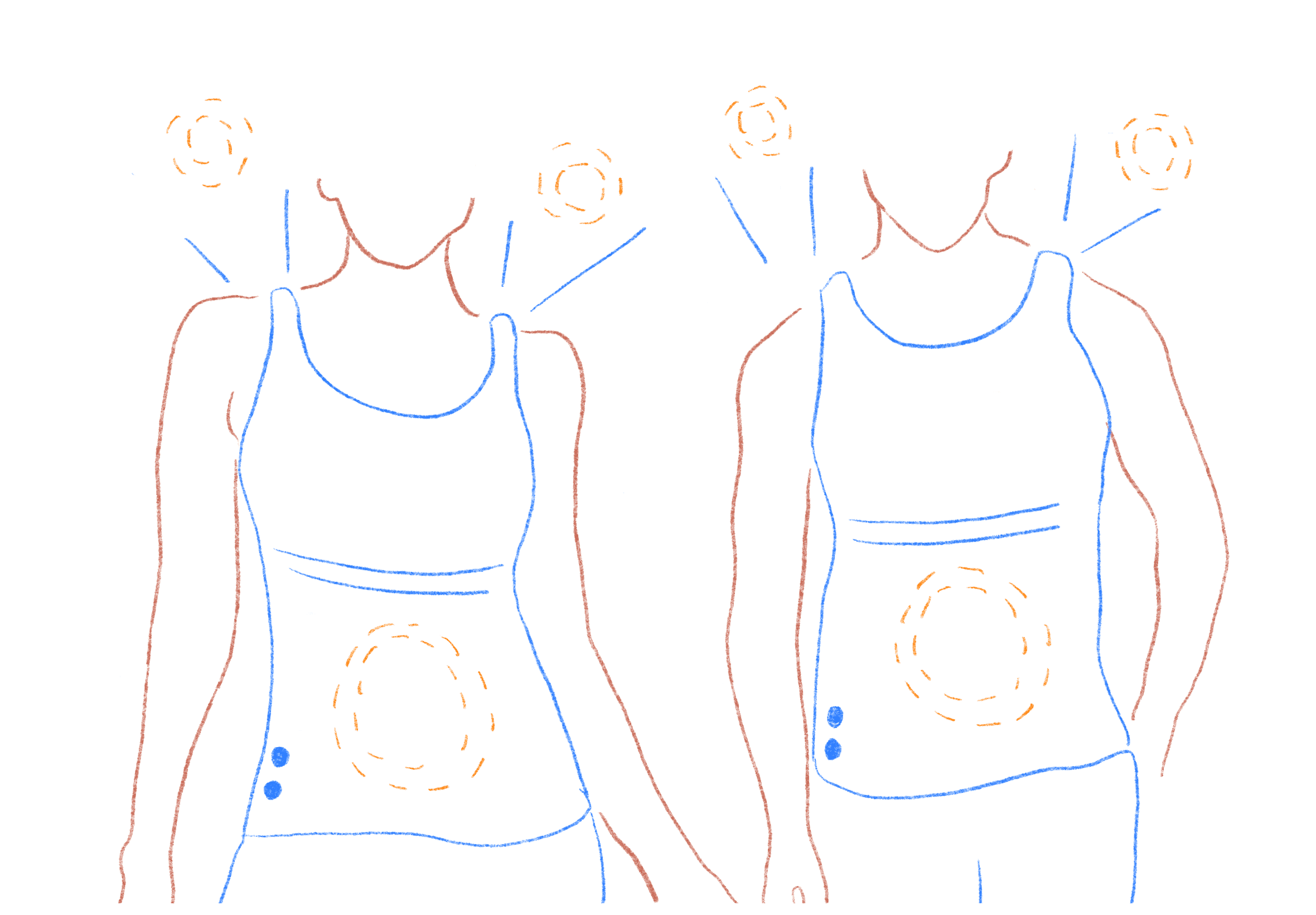
Concept 02
Huggable Garment
A soft undergarment made with built in pressure zones, designed to replicate a warm hug.

Concept 03
E-Pet Companion
Interactive smart "tamagotchi" with therapeutic games and soft silicon exterior for tactile stress relief.
Round 2 Prototyping
From Concept to Pocket-Sized Companion
We refined the direction into an e-pet companion, and I developed a storyboard to map real-time interactions. Users responded positively to its interactivity and haptic comfort. At the same time, feedback emphasized the need for discretion — balancing screen size and subtler aesthetics for broader appeal.

Round 3 Prototyping
Building the Physical Companion
The final form takes on an organic, pebble-inspired shape with a matte silicone finish. The handheld device pairs seamlessly with a mobile app, combining tactile interaction with a familiar digital interface.
Creating a Calming Design System
I implemented a nature-inspired visual language to create a low-stimulation, calming interface: soft sand tones, ocean blues, and gentle gradients. Subtle glass effects and organic forms unify the digital and physical experience.

Reflection
01
Expand device ecosystem integration
Explore integrations with existing wearables and personal devices to extend OpO’s role within a broader health ecosystem.
02
Define boundaries for passive tracking
Refine how much data is collected passively to balance personalization with user comfort and privacy.
03
Bridge to accessible human support systems
Enable pathways to therapist-led or human-guided care in moments where AI support alone is insufficient.
04
Design for healthy engagement
Introduce guardrails to prevent over-reliance on the companion or game mechanics, encouraging balance with real-world relationships and activities.